
Description
The Brute portable jetter
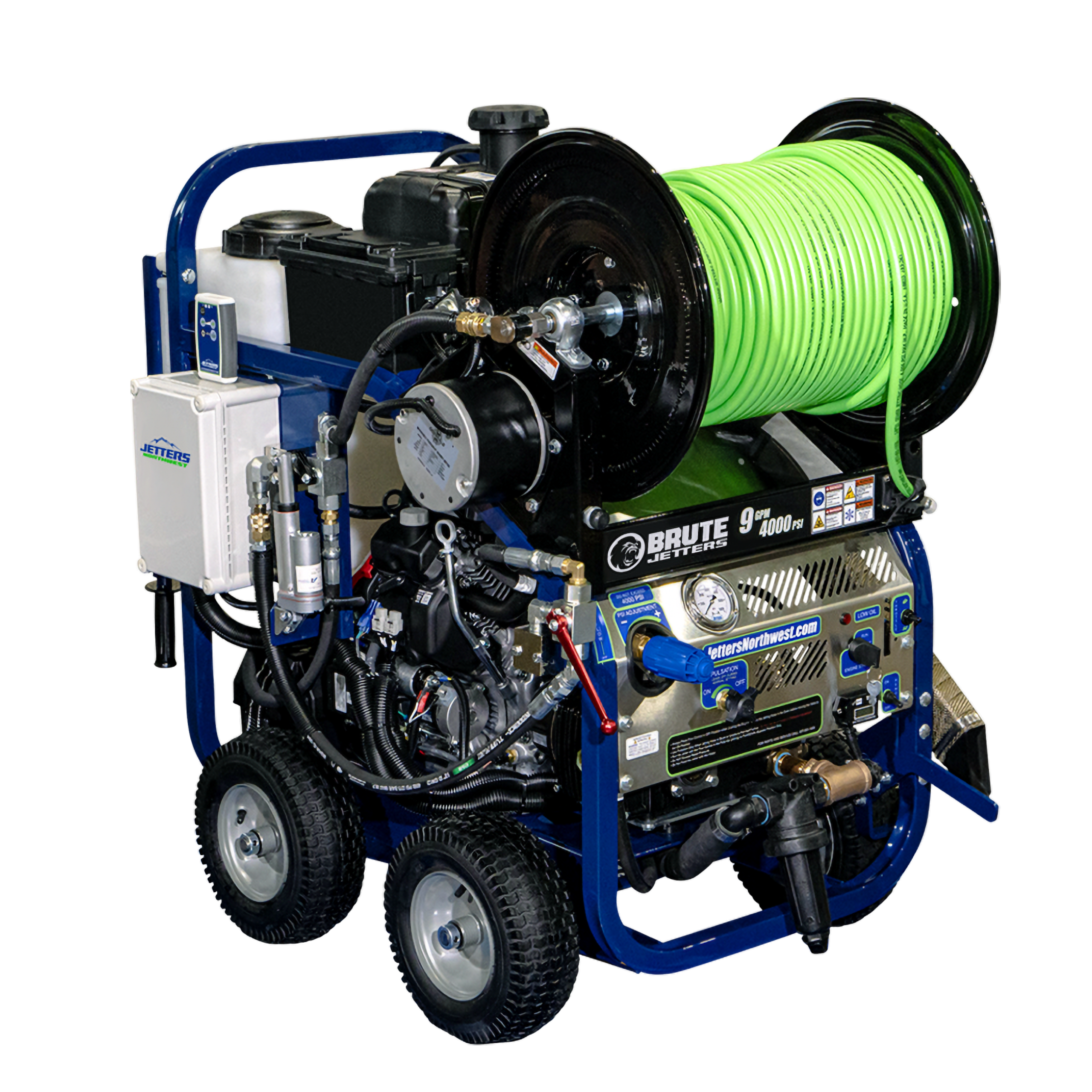
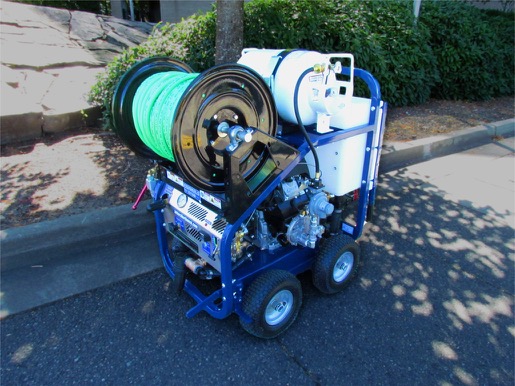
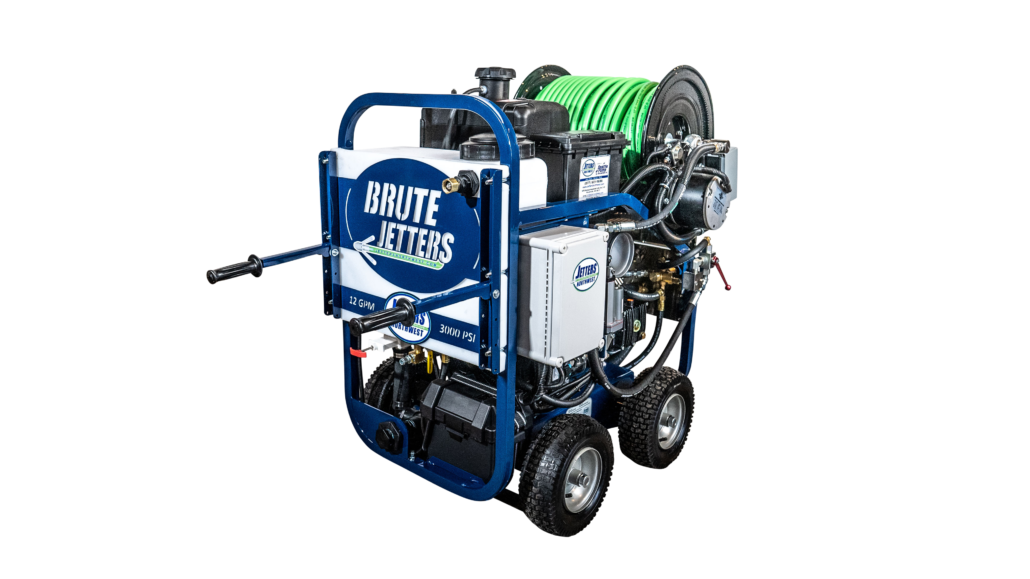
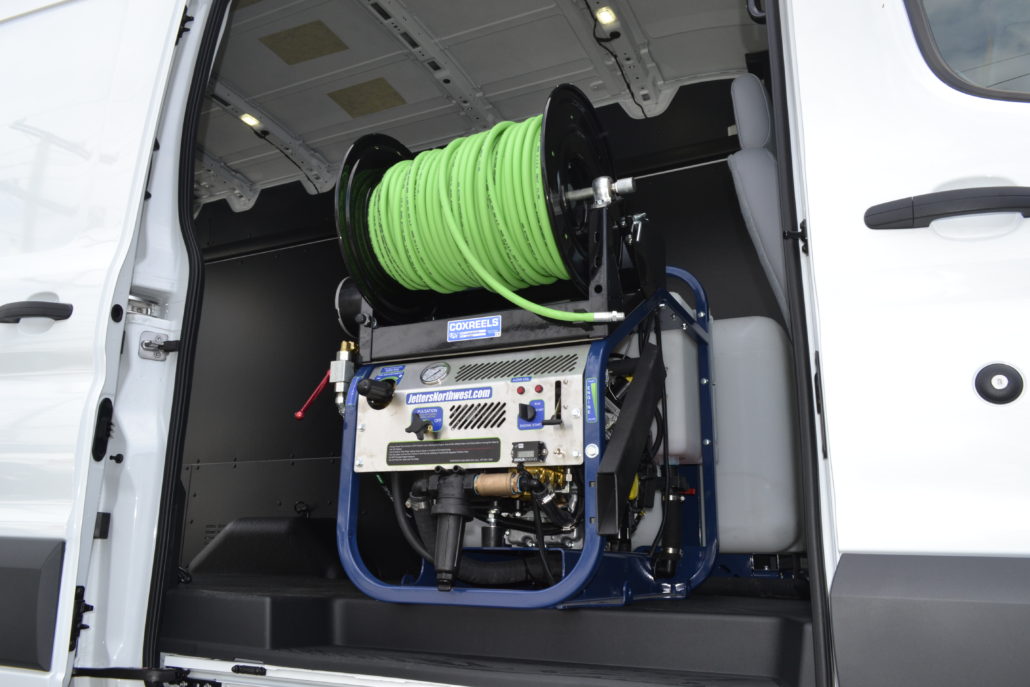
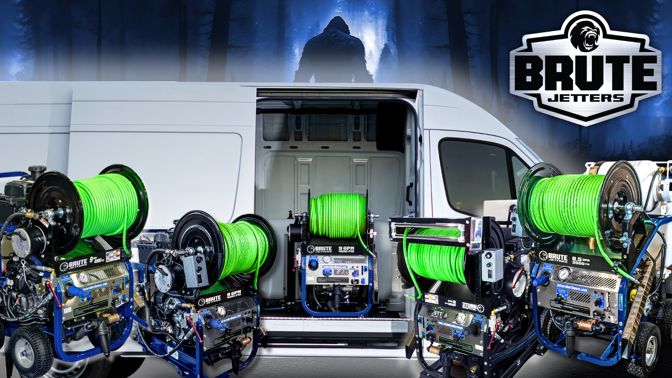
The Brute Jetter from Jetters Northwest is a heavy-duty portable hydro jetter machine for professional drain cleaning, offered as a four-wheel Cart you roll to the cleanout or a Skid you bolt into a van, truck or trailer.
Every Brute shares the same core: a fully welded, powder-coated steel roll-cage frame, a full control panel mounted just below the hose reel, an on-board buffer tank, and a heavy-duty A-frame reel on pillow block bearings. From there you pick the pump — 4009 (9 GPM @ 4,000 PSI, gas), 3012 (12 GPM @ 3,000 PSI, gas) or 3508LP (8.5 GPM @ 3,500 PSI, liquid propane) — and set it up the way your truck and your work need it.
Build your Brute Jetter
This page covers every Brute we sell, so the options above the Add to Cart button are where your machine takes shape. Here's what each one means, in the same order you'll pick them.
-
Model — pick your pump
Brute 4009, Brute 3012 or Brute 3508LP

Brute 4009
Gas · residential and light commercial
Flow9 GPMPressure4,000 PSI- Most of your work is residential and light commercial
- Nozzles run with more intensity at this flow rate
- You want a 3/8" hose that covers a wide range of pipe, from 3" to 6", with limited use in 2"
Brute 3012
Gas · flushing big lines
Flow12 GPMPressure3,000 PSI- You need to prioritize flushing in 6" line, and sometimes 8"
- You want more flushing power to carry debris back to the cleanout
- Less user-friendly in 3"–4" line, and not a fit for 2"
Brute 3508LP
Liquid propane · indoor jobs
Flow8.5 GPMPressure3,500 PSI- You need a capable cart jetter indoors, where gasoline fumes rule out a gas engine
- Same engine as the gas models, just running on a different fuel
- Propane still produces exhaust, so follow the site's ventilation requirements
Rule of thumb: choose by the pipe you run most, not by the bigger number. The 9 GPM 4009 gives your nozzles more intensity for everyday residential and light commercial work. The 12 GPM 3012 gives up some of that intensity for more flushing power in 6" and 8" line. And if you need to jet indoors, go with the propane 3508LP.
-
Style — Cart or Skid
Same machine either way. The Brute is modular, so the portability kit comes off to mount it as a skid, and you can switch later as your needs change.
Brute Cart
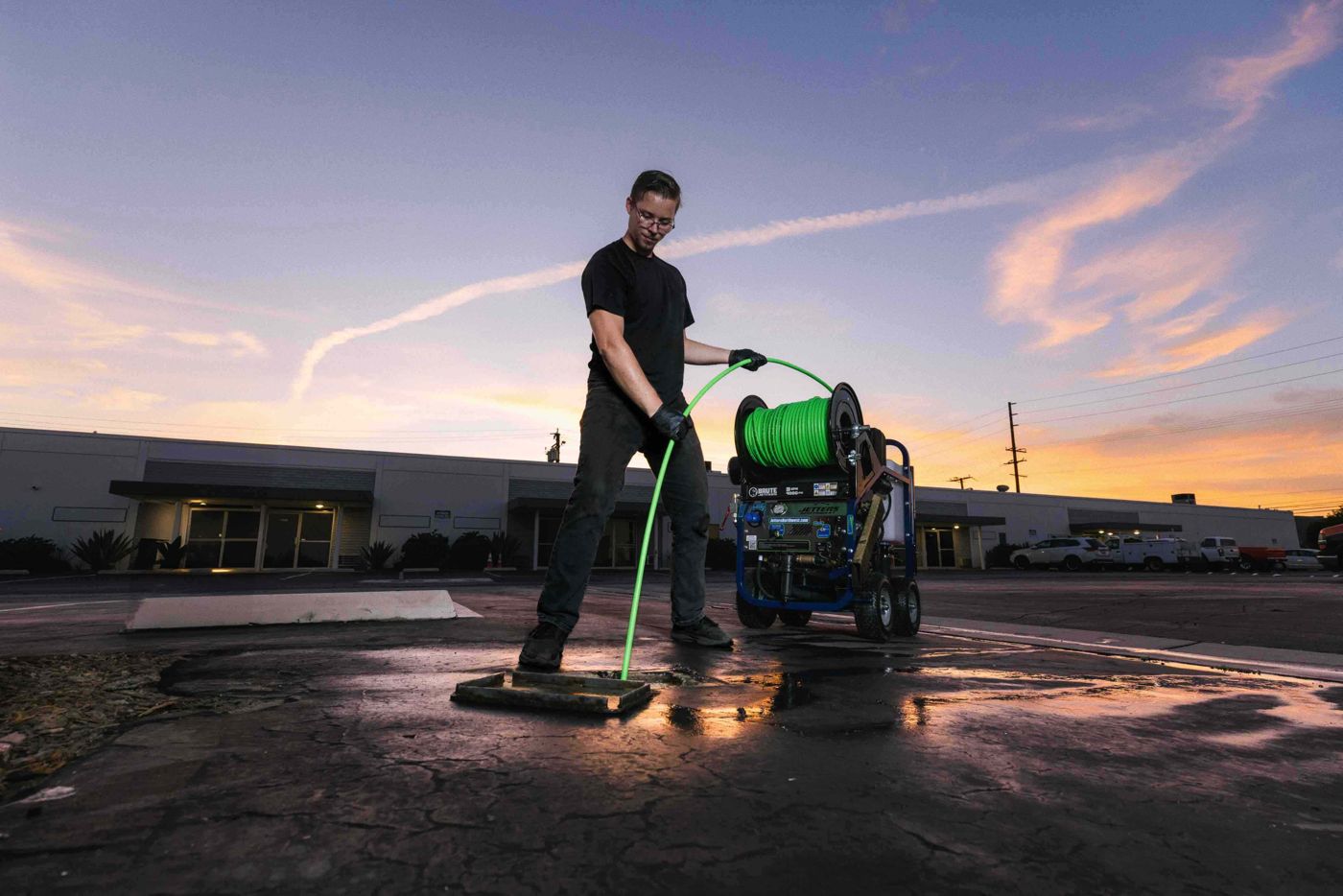
A portable cart jetter you roll to the cleanout
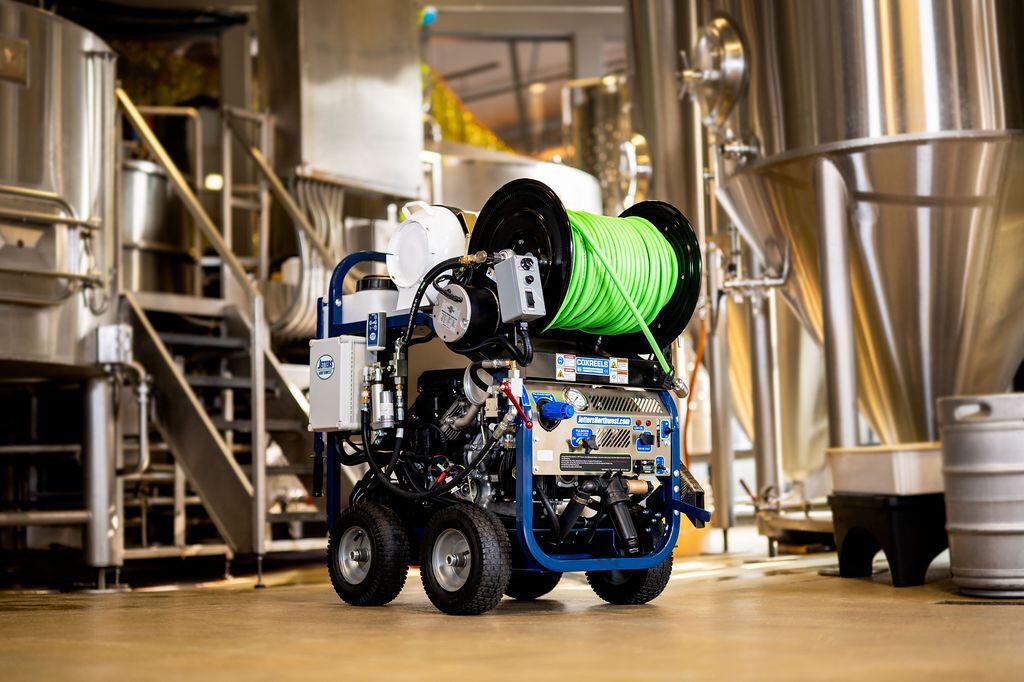
- Four-wheel portability kit with folding handles and a wheel brake to park it where you leave it
- Single-point lifting eye for loading it in and out of the truck
- Your cleanouts are often in backyards, alleys or places the truck can't reach
- You share one jetter between trucks or crews
Brute Skid
A skid jetter you bolt in and go to work
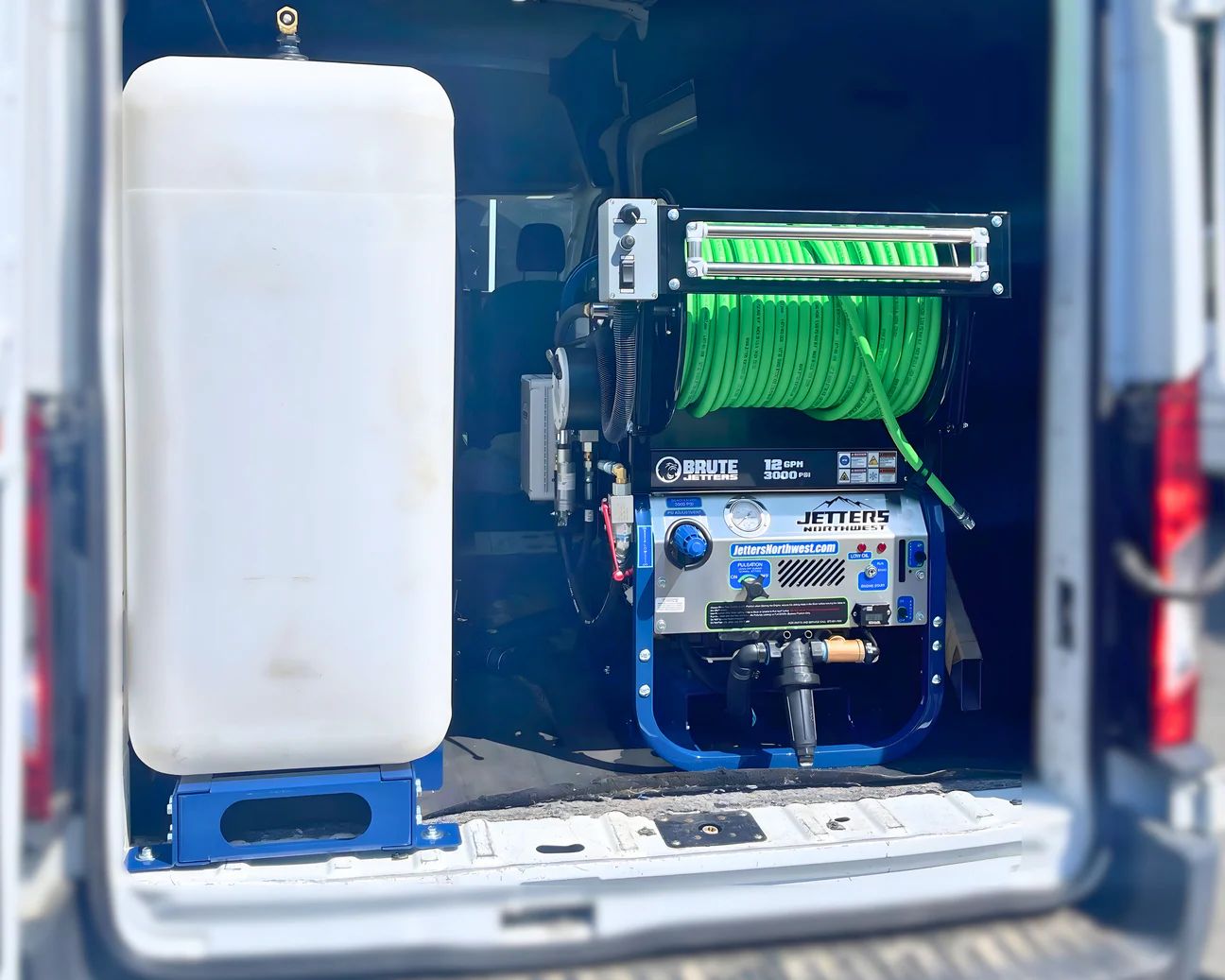
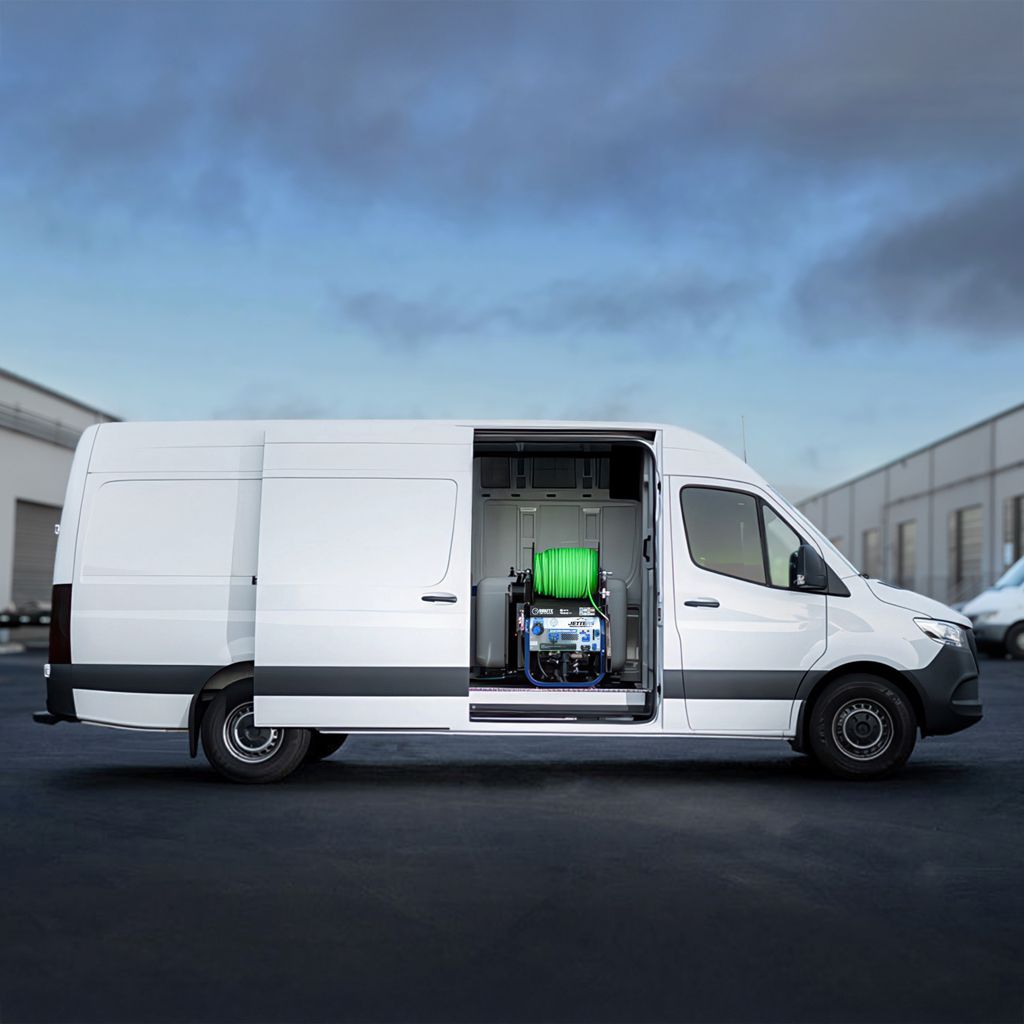
- Mounts in a van, truck or trailer — compact enough for a small van like a Ford Transit Connect
- Pairs with a larger water tank skid for longer runs without refilling
- The truck is your shop, and you want the jetter ready the moment you park
- You'd rather feed hose off the truck than roll 500+ lb across a lawn
-
Hose Reel — how the hose comes home
Hand Crank, Powered On/Off or Powered Variable Speed
Hand Crank
The simplest setup, with nothing electrical on the reel. You wind the hose back in yourself.
Powered On/Off
Rewinds under power at the flip of a switch, so pulling 300 ft of hose back isn't a workout.
Powered Variable Speed
Control the speed and direction of the reel. It's also the reel the optional wireless remote can run from the cleanout.
-
Hose Length — size and reach
1/2" × 300 ft, 1/2" × 400 ft, 3/8" × 300 ft or 3/8" × 400 ft
3/8" or 1/2" hose
3/8" hose is lighter and gets into smaller lines. 1/2" hose moves more water with less pressure lost along the way, which is why Jetters Northwest pairs 3/8" with the 9 GPM 4009 and 1/2" with the 12 GPM 3012.
300 ft or 400 ft
The extra 100 ft buys reach on long laterals and commercial runs. Every foot of hose costs a little pressure at the nozzle, so go long only if your jobs call for it.
-
Nozzle Kit — start with the right tools
Yes or No
The jetter supplies the water. The nozzle decides what it does in the pipe. Add the nozzle kit if you want a starter set on the truck from day one, or build your own from our sewer jetter nozzles page, which breaks down penetrators, cutters, flushers, pushers and spinners by the job.
What makes it different
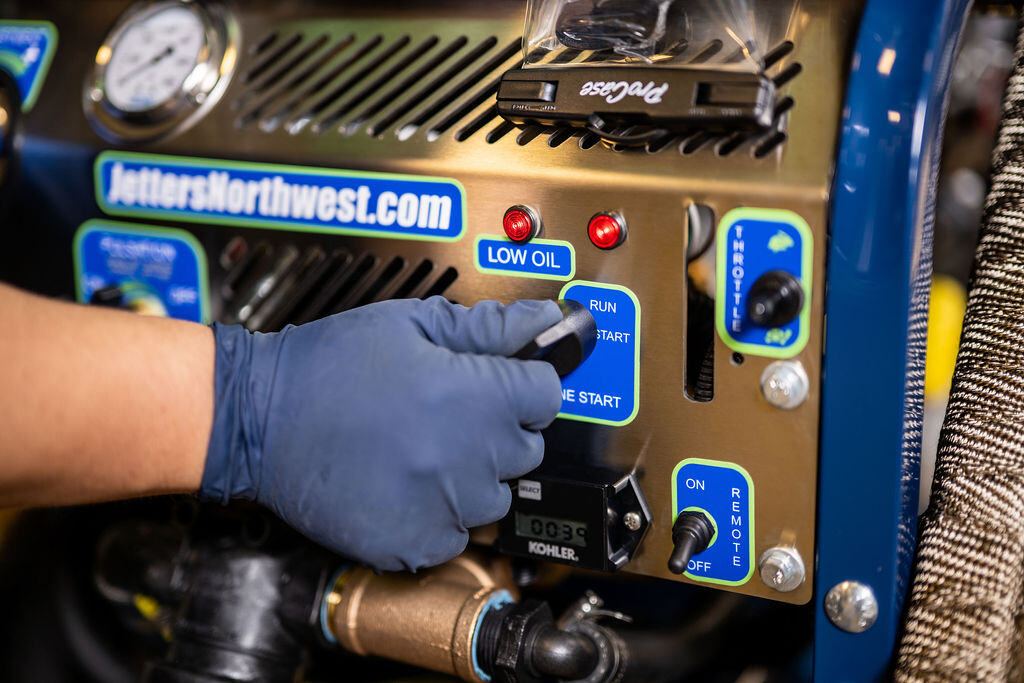
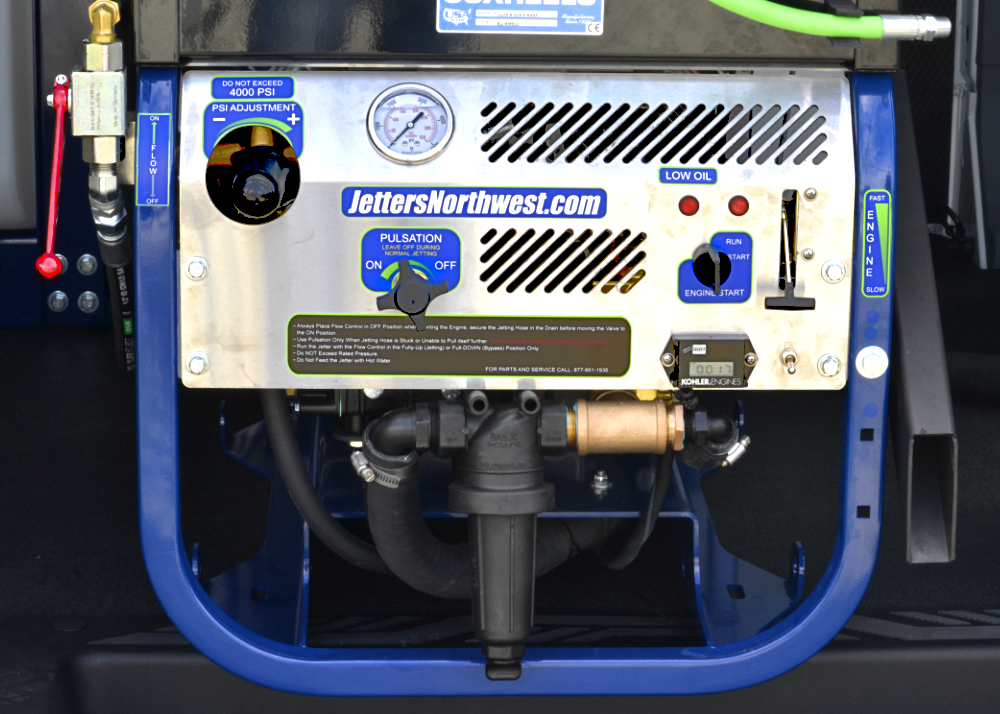
Every control on one panel
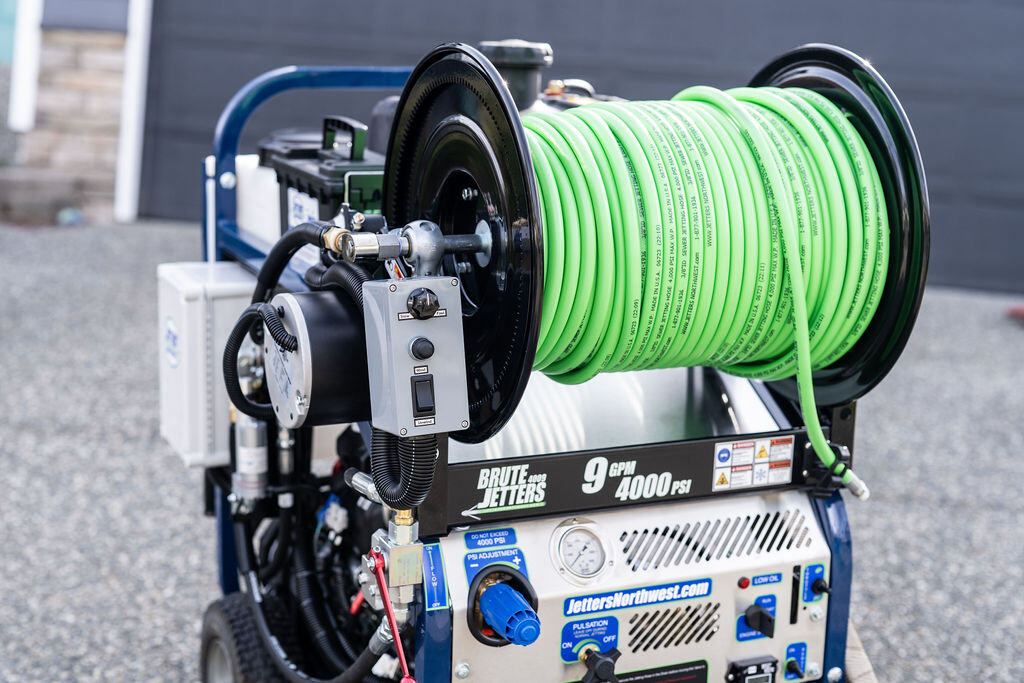
Engine key switch, throttle, pressure gauge and jetting controls sit together just below the hose reel. You run the whole job from one spot instead of walking around the machine.
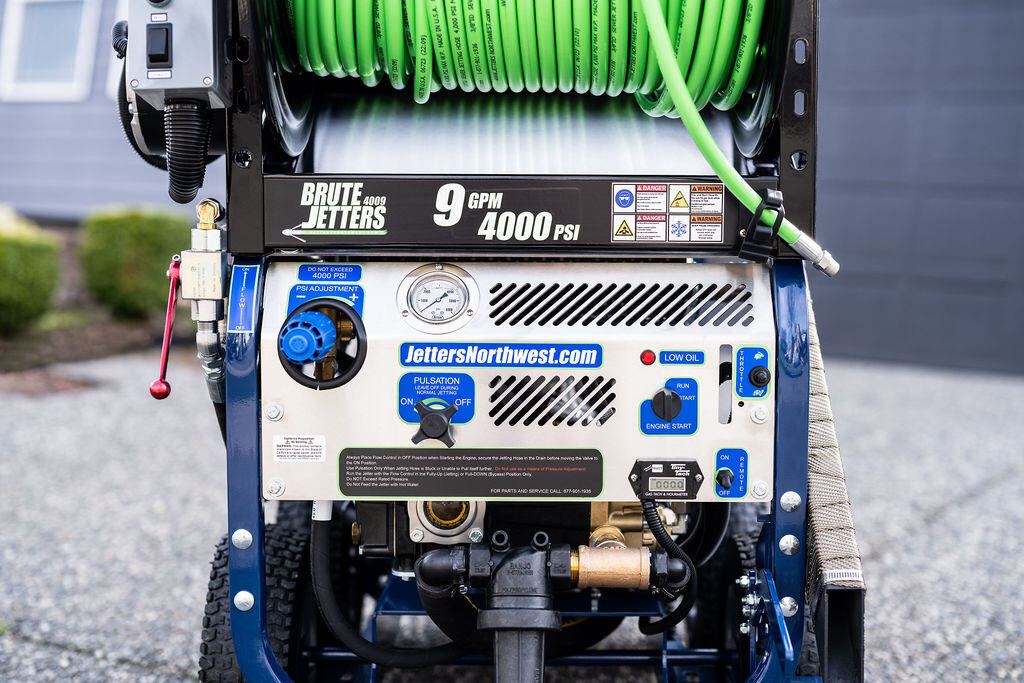
Dial in the pressure
The adjustable pressure regulator gives you a wide range of settings, so you can back off for fragile pipe and bring it up for heavy grease. It also lets you run remote shutoff valves or a foot pedal.
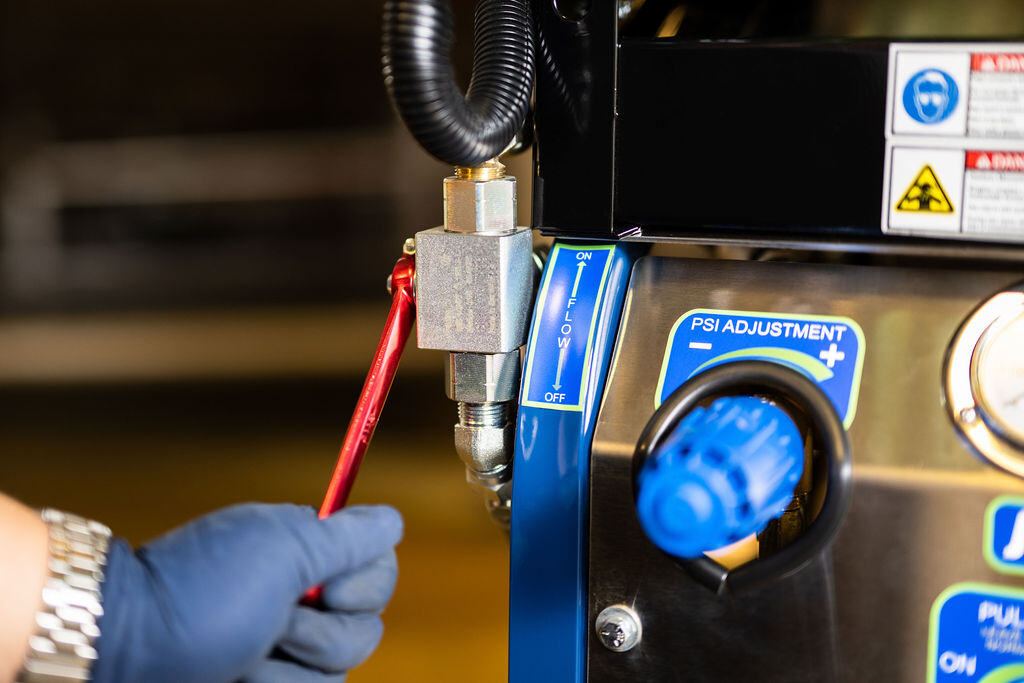
Keeps the pump cool between pushes
A 3-way jetting valve sends water to the nozzle or bypasses it back to the tank. The pump keeps circulating water while you reposition instead of dead-heading.
Pulsation, for when you're stuck
Pulsation is a last-resort tool for freeing a hose that's hung up, and it stays off during normal jetting. Don't use it to make a turn: if the nozzle won't take a turn with pulsation off, getting it past with pulsation doesn't mean you'll get it back.
Hose bib or tank — your call
The 12-gallon on-board buffer tank with a float valve draws from a hose bib, or connects to a larger water tank when the site supply can't keep up. The buffer tank doubles as an antifreeze tank for winterizing.
Built like a roll cage
A fully welded, powder-coated steel frame protects the Kohler fuel-injected V-twin and the UDOR super-duty gearbox-driven pump. A liquid-filled gauge and an hour meter/tach help you keep up with maintenance.
What it clears
A hydro jetter scours the full pipe wall and flushes the debris out over long distances. With the right nozzle on the end, the Brute handles:
- Grease and FOG buildup in kitchen and restaurant lines
- Root intrusions, with a root-cutting nozzle
- Sludge, soft stoppages and sediment
- Sand, gravel and debris in storm and area drains
- Maintenance flushing on commercial accounts
- Final flush after a line has been cleaned
What comes with it
- Jetting hose on the reel, in the size and length you choose
- Frame-mounted storage box to keep nozzles and small tools close at hand
- Anti-turnaround nozzle extension to help keep the nozzle from reversing in larger pipe
- Multi-tip cleaner in a protective flip case
- Hose holder to secure the hose when it's not in use
- Operator's manual, printed and digital
How it works
Diagnose the problem
If the pipe is holding water, start with a penetrator. If it isn't, choose the nozzle that fits the job from our sewer jetter nozzles page.
Hook up and pick your hose
Connect the jetter to your water supply. Then decide whether to run the base hose on the reel or a secondary auxiliary hose, depending on pipe size and the length of the run.
Feed the nozzle, then set pressure
Get the nozzle into the pipe first. Then set your working pressure on the regulator and check it on the gauge.
Clean the pipe
Work the nozzle through the line until it's clean, then bring the hose home on the reel.
Add-ons worth asking about
Jetters Northwest builds a set of options around the Brute. Give us a call and we'll help you figure out which ones pay off for your work.
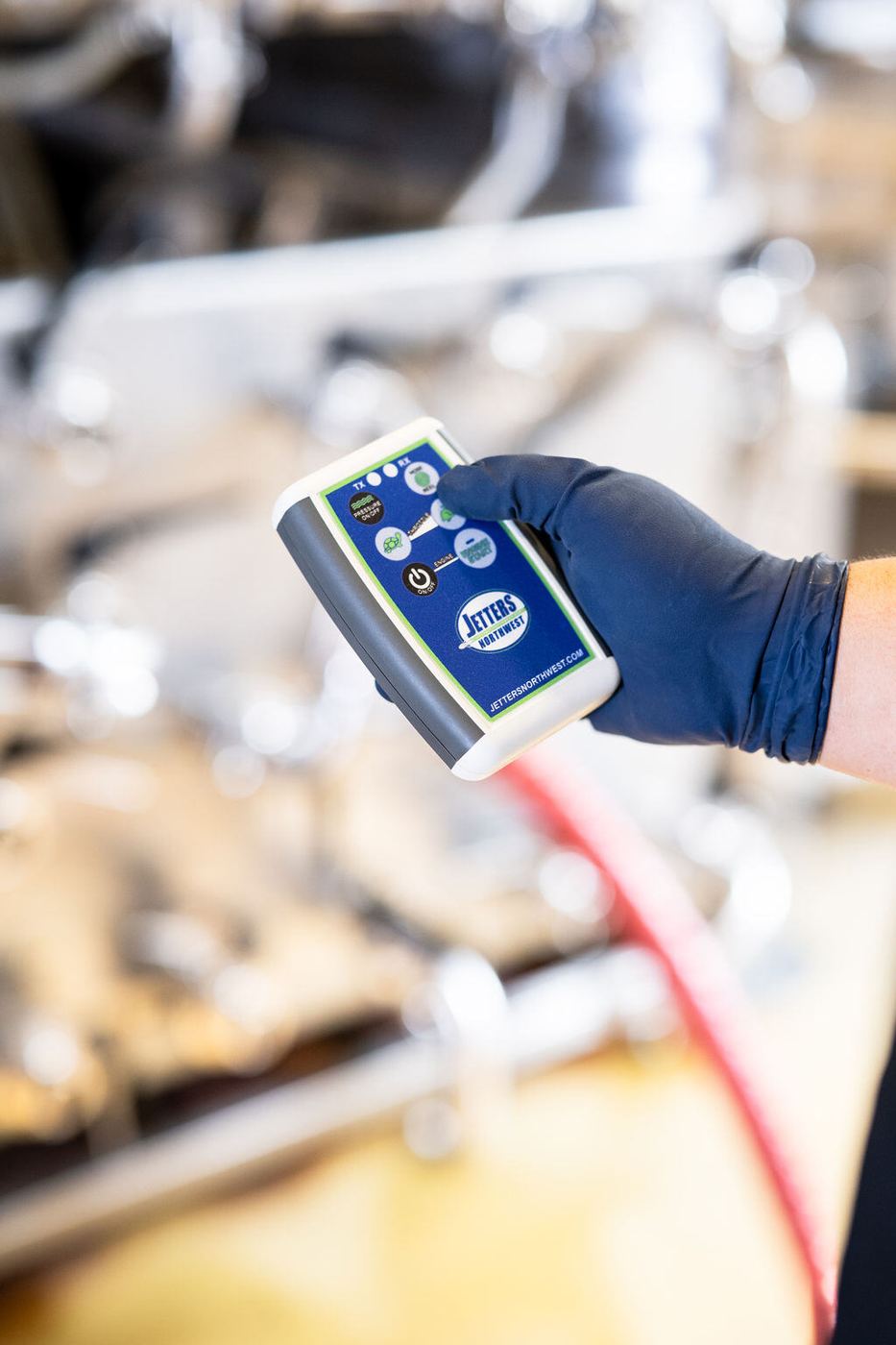
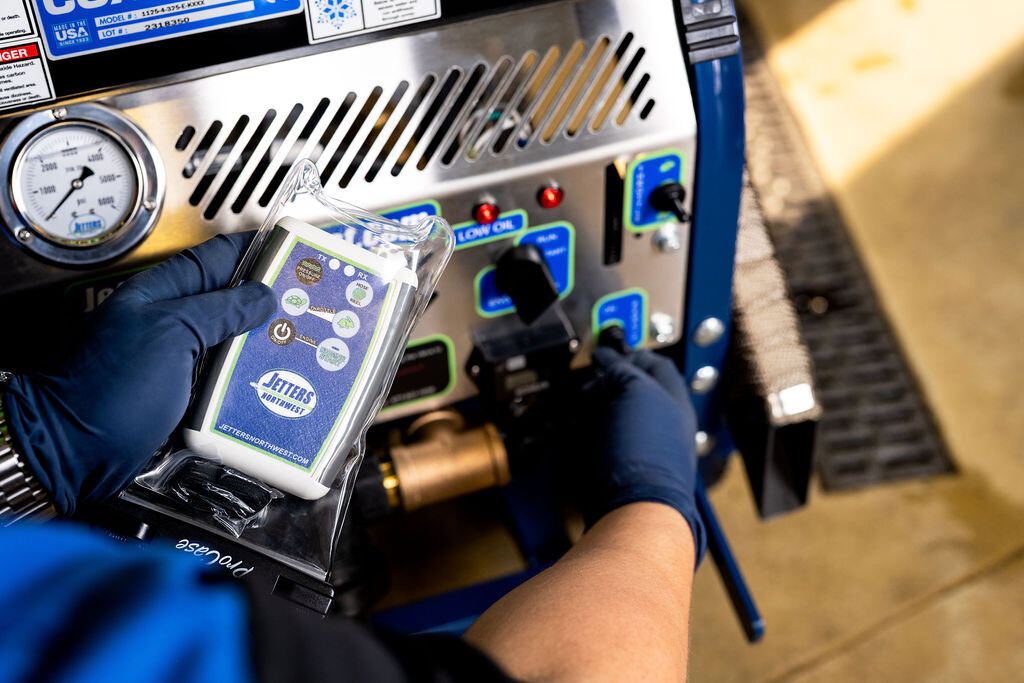
Deluxe Wireless Remote
Start and stop the engine, run the throttle and turn jetting flow on or off from the cleanout, without walking back to the machine. With a variable-speed reel it runs the reel too.
A remote switch on the panel lets you hand control to the remote or keep it at the machine.
Brute Hot Box
Adds on-demand hot water for hard grease and frozen lines, up to 160°F depending on your jetter's flow.
4-roller hose guide
Protects the hose where it turns into the cleanout and carries a nozzle storage bar.
Questions? We're a phone call away
If you pick up your Brute at our shop in Orange, we'll walk you through setup and the controls before it goes on the truck. Wherever you are, call us at 714-453-9760 with a question about the machine, the options or which nozzle fits a job, and we'll help you sort it out.
See it in action
Specifications
By model
| Specification | Brute 4009 | Brute 3012 | Brute 3508LP |
|---|---|---|---|
| Flow | 9 GPM | 12 GPM | 8.5 GPM |
| Pressure | 4,000 PSI | 3,000 PSI | 3,500 PSI |
| Fuel | Gas | Gas | Liquid propane |
| Engine | Kohler fuel-injected V-twin | Kohler fuel-injected V-twin | Same engine, set up for propane |
| Pump | UDOR super-duty, gearbox drive | UDOR super-duty, gearbox drive | — |
| Fuel tank | 5 gal, CARB/EPA-compliant | 5 gal, CARB/EPA-compliant | — |
| Standard hose size | 3/8" ID | 1/2" ID | — |
All models
| Specification | Detail |
|---|---|
| Hose options | 1/2" × 300 ft, 1/2" × 400 ft, 3/8" × 300 ft, 3/8" × 400 ft |
| Hose reel options | Hand crank, powered on/off, powered variable speed |
| Hose reel | Welded steel A-frame on pillow block bearings |
| On-board water | 12 gal buffer tank with float valve; doubles as antifreeze tank |
| Water supply | Hose bib or auxiliary water tank |
| Controls | Panel-mounted key switch, throttle, adjustable pressure regulator, liquid-filled pressure gauge, 3-way jetting valve with bypass to tank, pulsation control, hour meter/tach |
| Frame | Fully welded steel roll cage, powder-coated |
| Manufacturer | Jetters Northwest, Woodinville, WA |
By style
| Specification | Brute Cart | Brute Skid |
|---|---|---|
| Mobility | 4-wheel kit, 12" wheels, folding handles, wheel brake | Bolt-down mount for van, truck or trailer |
| Lifting | Single-point lifting eye | — |
| Tank options | Connects to an auxiliary water tank | 55, 100, 150 or 200 gal tank |
| Dimensions (L × W × H) | 45 × 35 × 45 in | 44 × 32 × 41 in |
| Weight, dry | 550 lb | 500 lb |
| Weight, gross | 650 lb | 600 lb |
Figures are from Jetters Northwest for the 4009 and 3012. Cart and Skid are the same machine, so you can convert one to the other later.
Documents
For help choosing the right nozzle for the job, start with our nozzle guide. Every Brute ships with a printed and digital operator's manual.
Frequently asked questions
What's the difference between the Brute Cart and the Brute Skid?
It's the same jetter. The Cart has a four-wheel portability kit with folding handles and a wheel brake so you can roll it to the cleanout. The Skid has the kit removed so it bolts into a van, truck or trailer. Because the Brute is modular, you can switch from one to the other later.
Which Brute Jetter model should I get — 4009, 3012 or 3508LP?
Start with the pipe you run most. The 4009 (9 GPM @ 4,000 PSI) is the pick for residential and light commercial work in 3"–6" line, and with its 3/8" hose it can handle a little 2". Nozzles work with more intensity at that flow. The 3012 (12 GPM @ 3,000 PSI) is for crews who need to prioritize flushing 6" and sometimes 8" line. It's less user-friendly in 3"–4" and not a fit for 2". The 3508LP (8.5 GPM @ 3,500 PSI) runs on propane for indoor jobs where a gas engine can't be used. Call us with the work you do most and we'll help you pick.
Is the Brute Jetter gas powered or electric?
Neither is electric. The 4009 and 3012 run on gas with a Kohler fuel-injected V-twin. The 3508LP uses the same engine running on liquid propane, for indoor jobs where gasoline fumes aren't allowed.
Can I run the Brute off a garden hose?
Yes. It draws from a hose bib into its 12-gallon buffer tank. When the site supply can't keep up with the pump, connect it to a larger auxiliary water tank.
Which hose should I choose, 3/8" or 1/2"?
3/8" hose is lighter and gets into smaller lines, and it's the standard pairing for the 9 GPM 4009. 1/2" hose carries more water with less pressure loss, which is why it's standard on the 12 GPM 3012. Choose 400 ft only if your runs need the reach, since longer hose costs a little pressure at the nozzle.
Will the Brute fit in a small van?
The Skid is built to mount in a van, truck or trailer, and it's compact enough for a small van like a Ford Transit Connect. Measure your cargo space against the specs, or call us and we'll talk it through.
Can a hydro jetter damage pipes?
Used correctly, a hydro jetter is safe for drain and sewer lines. High pressure can harm pipe that's already old, corroded or fragile, so run a camera first. The adjustable regulator lets you set the pressure to match the pipe.
When should I use pulsation?
Only as a last resort to free a hose that's stuck. Keep it off during normal jetting, and never use it to push the nozzle through a turn. If the nozzle can't make a turn with pulsation off, getting it past with pulsation doesn't mean you'll get it back out. The rare exception is very long runs on large commercial jobs.
Which nozzles do I need?
It depends on the job. Penetrators open a stoppage, cutters and spinners handle roots and grease, and flushers clean the line out. Our sewer jetter nozzles page breaks them down by job.
How do I winterize the Brute?
The buffer tank can be used as an antifreeze tank. Run antifreeze through the pump and hose before storing the machine in freezing weather, following the operator's manual.
Who makes the Brute Jetter?
Jetters Northwest in Woodinville, Washington, a division of Seattle Pump and Equipment. EPL Solutions sells and supports the Brute from our shop in Orange, California.
How fast does it ship?
As long as we have the parts in stock, we normally ship the same day or the following day. Larger items that require freight shipping can take a little longer.
Brute cart jetter vs. skid jetter
| Brute Cart | Brute Skid | |
|---|---|---|
| Best for | Cleanouts the truck can't reach, shared machines | Dedicated jetting trucks, vans and trailers |
| Mounting | Rolls on 4 wheels with a wheel brake | Bolts down |
| Models | 4009, 3012, 3508LP | 4009, 3012 |
| Extra water | Hose bib or auxiliary tank | 55–200 gal tank options |
| Weight, dry | 550 lb | 500 lb |
| Convertible later | Yes | Yes |
Swipe to compare
Not sure which Brute fits your work?
Tell us the lines you run most and how you get to them, and we'll help you set it up right.

There are no reviews yet.